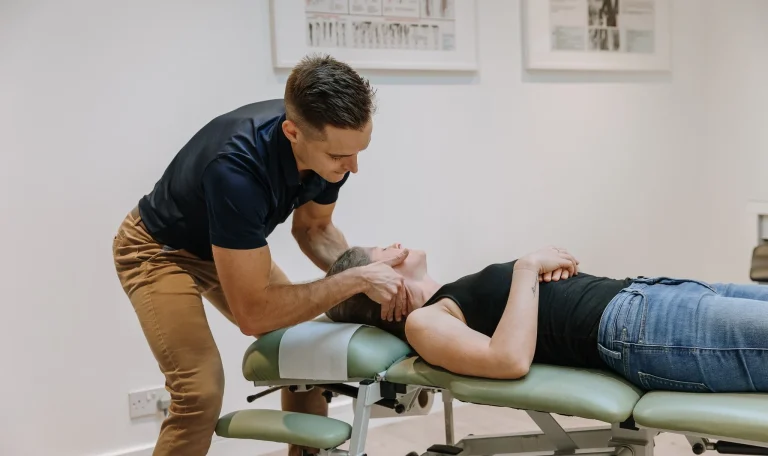
Stiffness rarely announces itself with sharp pain. Instead, it shows up as small compromises. A person turns the whole torso to check traffic. Another avoids the bottom shelf entirely. These adjustments feel minor until they become habits. Age gets blamed, though the cause runs deeper. A visit to a chiropractor north austin maps those patterns carefully. Conservative care begins with measurement, not manipulation. Range testing, daily habits, and gentle methods shape that process.
Joint Stiffness Starts Below the Surface
Cartilage thins with age, and synovial fluid circulates less freely. Ligaments also tighten after long periods of sitting. Think of a door hinge left unused all winter. It still works, yet it grinds before loosening. Old sprains leave scar tissue that restricts glide.

What Happens During a Mobility Evaluation?
A thorough first visit rarely involves immediate adjustments.
- The chiropractor reviews prior injuries and work routines.
- Goniometer readings capture each joint’s exact range.
- Orthopedic tests check whether ligaments stay stable.
- Gait observation reveals compensations in hips and knees.
- Imaging gets ordered only when red flags exist.
Gentle Techniques Replace Forceful Cracking Approaches
Conservative care favors low-force methods for sensitive joints. Mobilization moves a joint slowly through its available range. Instrument-assisted adjustments deliver precise, light impulses instead of twisting. An older adult with arthritis tolerates this well. Choosing a chiropractor north austin patients trust means expecting this measured pace.
Can Daily Habits Undo Treatment Progress?
Absolutely, and desk posture leads the list. Eight hours hunched forward stiffens the thoracic spine. Progress made on Tuesday fades by Friday without changes. Small fixes matter more than dramatic overhauls. Raising a monitor two inches can relieve neck strain. Hourly standing breaks keep hip flexors from shortening.
Which Signs Suggest Referral Beyond Chiropractic?
Conservative care has clear limits. Certain symptoms call for a physician first:
- Swelling arrives with fever.
- Numbness spreads down both legs.
- Pain wakes someone nightly.
- Weight drops without explanation.
Responsible practitioners screen for these before any hands-on work.
Small Range Gains Change Ordinary Mornings
Pain scores tell only half the story. Ten extra degrees of neck rotation sounds trivial on paper. In practice, it lets a driver glance over one shoulder. That bottom shelf stops being a negotiation. Mobility, measured honestly, becomes the real marker of recovery.
FAQs
Is chiropractic care safe for arthritic joints?
Low-force methods suit arthritis when inflammation stays controlled. A careful exam rules out active flare-ups before treatment begins.
How many visits does stiffness typically need?
Mild cases may improve over four to six sessions. Chronic restrictions take longer and depend on consistent home exercise.
Does an adjustment always produce a popping sound?
No, the sound is gas releasing from fluid around the joint. Mobilization and instrument techniques often produce no noise at all.
Should imaging happen before the first session?
Imaging is reserved for trauma, red-flag symptoms, or suspected fractures. Most stiffness cases are assessed through physical testing alone.